(An Adaptation Living LLC company)
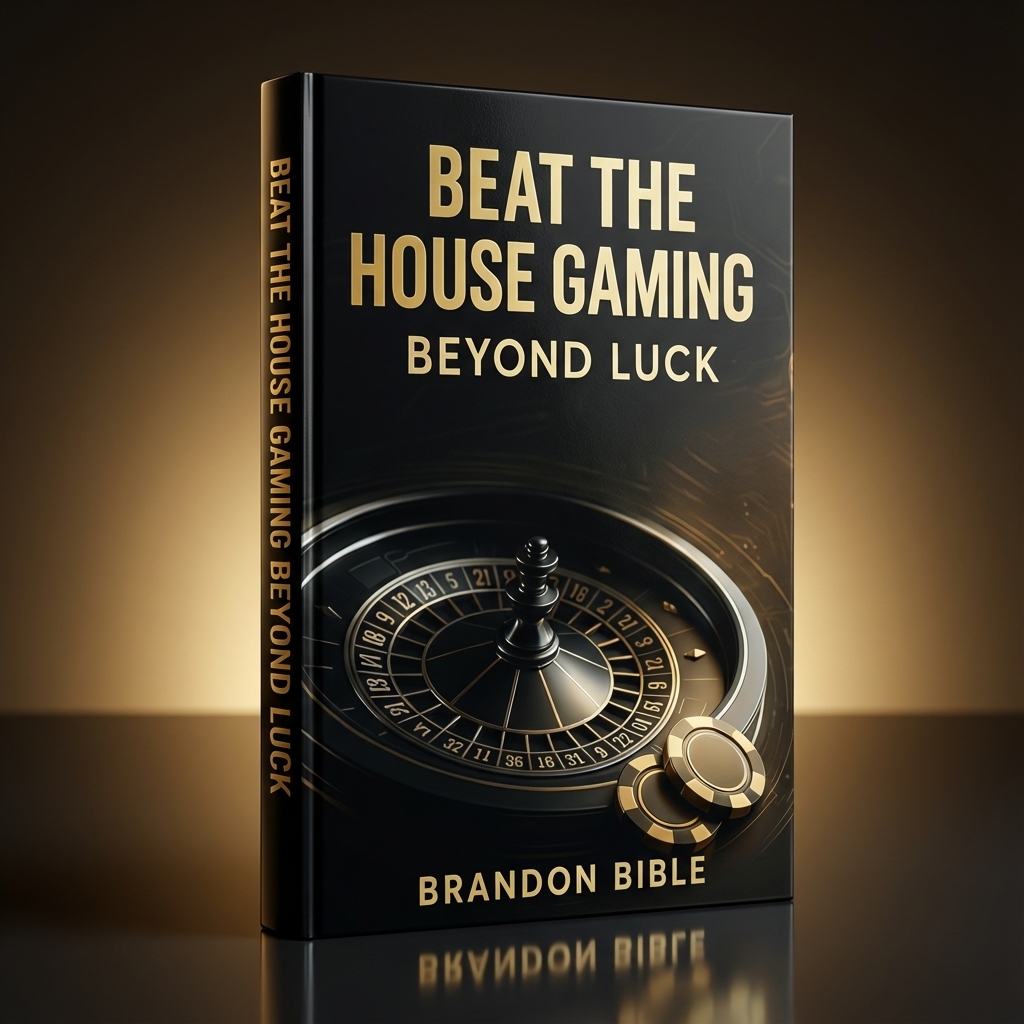
I didn’t write this book to tell another gambling story. I wrote it to give people a tool — something solid you can actually use when you sit down at a wheel or a machine. Beat the House Gaming – Beyond Luck is the blueprint I used in real casinos to turn roulette, high limit slots, and keno into something measurable instead of emotional.
The system in this book is not about cheating and it’s not about chasing. It’s about reading what the casino gives you — spin by spin, cycle by cycle — and letting math, timing, and discipline call the shots. I break down exactly how to track results, how to manage your bankroll so you don’t blow yourself up, and how to apply the Trinity System to keep control even when the table is trying to drag you into chaos.
If you want superstition, this isn’t it. If you want a repeatable framework you can take to an automated roulette terminal and follow step-by-step, this is where that starts.

Every casino game is built around two things: expected value and human behavior. You can’t rewrite the math, but you can stop playing the way the casino wants you to. The Beyond Luck system focuses on three pillars:
Roulette isn’t “random” the way people think. Wheels have tolerances. Dealers have speed habits. Automated terminals use pseudo-random sequences, but still produce cycles and streak structures you can study over hundreds of spins.
In the book, I walk you through a process called spin mapping:
Over time, each wheel or terminal starts to show you a fingerprint: where it tends to land when it’s spinning at certain speeds or inside certain streak patterns. The system doesn’t guess — it waits until those patterns show themselves and then works inside them.
The Trinity System is the backbone of the method. It’s a three-lane structure you run at the same time:
In the book, I give step-by-step examples of Trinity sequences on real wheels and automated terminals: how many units to use, how many spins to give a pattern, and when to shut down a sequence that isn’t behaving. The point is simple: you never chase; you execute.
Another core part of the system is bankroll design. Instead of walking in with “however much cash you feel like,” you break it into:
This way, a bad session doesn’t wreck your entire operation, and a good session doesn’t get handed back because you stayed too long. The book teaches you how to set these numbers based on your life, not someone else’s fantasy.
Automated roulette is where this method becomes a weapon. The machine never gets tired, the spin pace is consistent, and you can quietly track large samples without anyone noticing what you’re doing.
Sit down at the terminal and do nothing for the first block of spins except record:
You can do this on paper or with a tracking tool. The machine’s “last 10–20 numbers” display is not enough. You’re building your own database for that specific terminal.
After 50–100 spins, start identifying:
Your goal is not “lucky numbers.” Your goal is probability lanes — places where the machine is currently favoring the wheel.
Once you see a pattern with enough data behind it, you bring in the Trinity System:
You treat each automated machine as its own project:
The system isn’t about winning every spin. It’s about consistently extracting edges from machines you’ve studied while protecting yourself from the ones that aren’t giving you anything.
Want to hear how the system is laid out before you dive in? This AI-narrated preview covers the opening chapters of the book and walks through the foundation of the method.
Platform: iOS / iPadOS | Frameworks: SwiftUI, ARKit, Core Data, CoreMotion, RealityKit | Architecture: MVVM + Modular Analytics
The book gives you the framework. The Roulette Breaker app gives you the instrument panel. It’s a professional-grade roulette analytics suite built to study live and automated wheels using motion data, visual calibration, and statistical tracking. It does not place bets or interact with casino systems; it analyzes — so you can make decisions with clear data instead of noise.
At its core, Roulette Breaker:
Manual, photo, video, and AR calibration modes measure wheel RPM, ball speed, and pocket geometry. On live wheels, this lets you understand physical rhythm; on automated terminals, it helps you confirm whether the machine is behaving consistently over time.
Stores every calibration session with Core Data. Computes averages, variances, and a wheel reliability score — telling you how “trustworthy” the current environment is for Trinity play.
Consumes spin histories and bias metrics to produce weighted probability ranges, then displays them as heatmaps and highlight arcs on the roulette layout. You see where the wheel is leaning, not just where it landed last.
Mirrors the structure in the book: session banks, Trinity lanes, series progression, and automatic alerts when you hit profit or risk thresholds. Haptic feedback and visual cues keep you from overplaying a sequence.
Logs every spin into a hierarchy of Machine → Series → Spin with per-number and per-section statistics. This is where your “spins since hit” and streak mapping live — automated instead of by hand.
A live roulette board with glowing indicators for red/black, even/odd, high/low, and dozens. Color intensity tracks how long it’s been since each side bet hit, with stronger glow as a region becomes neglected, aligning with the cycle logic from the book.
Using ARKit and RealityKit, the AR Calibrator View can overlay virtual sectors on top of a real wheel through your camera. It measures real rotation speed and approximate pocket angles and feeds this data directly into the prediction layer. For automated wheels, you can still use the overlay as a visual training tool, lining up what you see on screen with how the machine behaves.
Because of how tightly this tool integrates calibration, AR, motion tracking, and gambling analytics, it does not fit within public App Store policies. I’m not going to water it down to make it “safe” for a store listing. Instead, to keep it powerful and compliant:
Roulette Breaker will be made available by direct rental only.
Approved users will be able to rent full access to the app on a per-day basis. During your rental window, you get:
This model keeps the tool out of the generic app store ecosystem and in the hands of people who are serious about using it as a professional-grade analysis platform, not a toy.
The Beyond Luck system gives you the rules. The Roulette Breaker app gives you the dashboard. Together, they turn roulette from chaos into something you can study, track, and attack with discipline.
Request App Access & Rental DetailsThe systems, methods, and tools described on this site are for adults who choose to gamble within their legal limits and financial boundaries. If gambling stops being entertainment and starts becoming stress, debt, or obsession, it is time to stop.
Problem with gambling? Help is available 24/7.
Call or text 1-800-GAMBLER (1-800-426-2537)
In the U.S., you can also visit your state or local problem gambling helpline resources for additional options.